
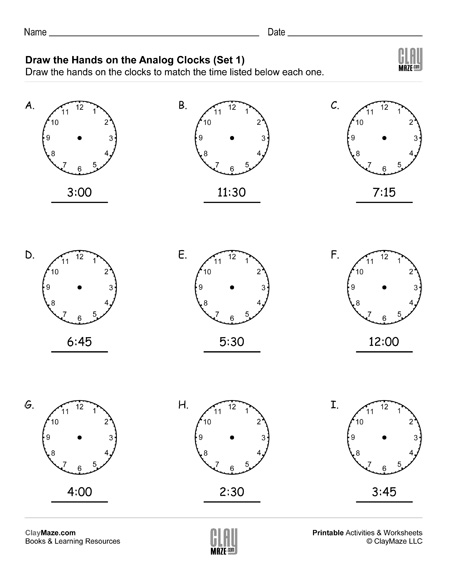
Draw the hands on each analog clock to match the time shown below it in these telling time with analog clocks worksheets. These practice pages give students meaningful practice with placing both the hour hand and the minute hand correctly, helping them understand how the two hands work together to show time. Remember that the hour hand doesn’t jump from one number to the next – it moves gradually as the minute hand travels around the clock – an important concept for mastering analog time.
All times appear in 15‑minute (quarter‑hour) intervals, including :00, :15, :30, and :45, making these worksheets perfect for students who are building foundational telling‑time skills. Each page includes nine clocks, providing plenty of opportunities for students to practice drawing clock hands and reinforcing their understanding of quarter‑hour increments.
These printables work well for classroom instruction, homework, or extra practice at home, and they support essential second‑grade math concepts related to reading and writing time on analog clocks.
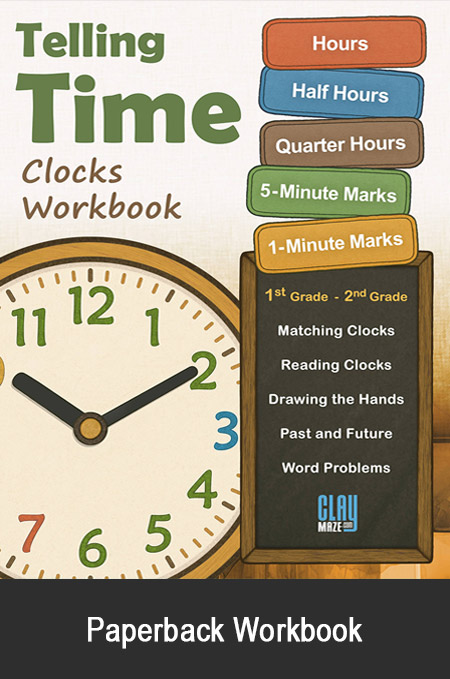
Worksheet 1 Worksheet 2 Worksheet 3 Worksheet 4For even more telling‑time practice, try our Telling Time Clocks Workbook. It offers a carefully organized progression of analog clock exercises, starting with times like :00 and :30, then moving into quarter‑hour times, and eventually covering 5‑minute and 1‑minute readings. You’ll also find sets of word problems along the way that help children use their time‑telling skills in everyday situations.


Related Worksheets
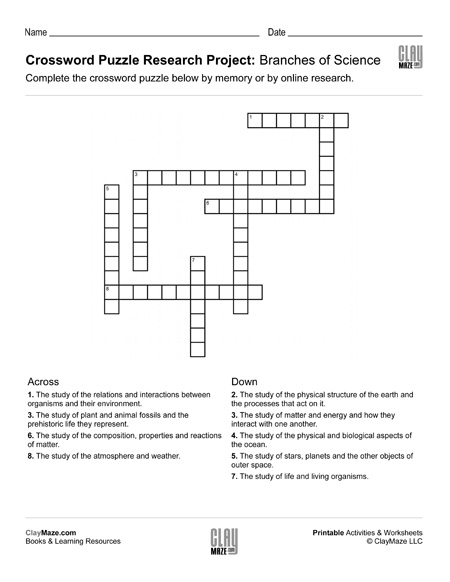
Crossword Puzzle Research Project – Branches of Science
This is a little bit of a spin from a traditional Crossword Puzzle lesson. This worksheet can be used as a followup to some study on the branches of science or it can be used as an online research project
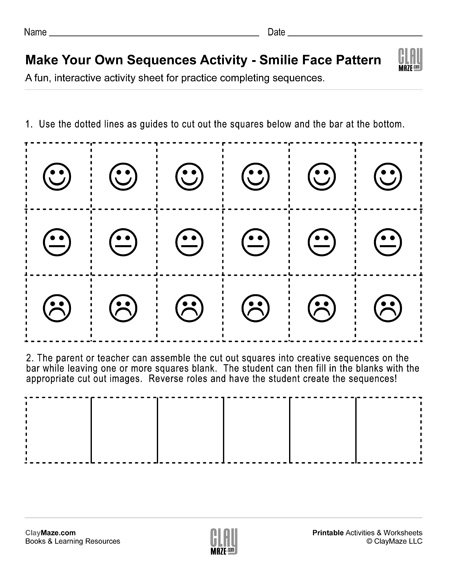
Make Your Own Sequences Activity – Smilie Face Pattern
Completing Sequences is a great way to develop pattern recognition skills in a child, but this activity adds another layer of interactivity for the student. Follow the directions on the page to have the child cut out all of the
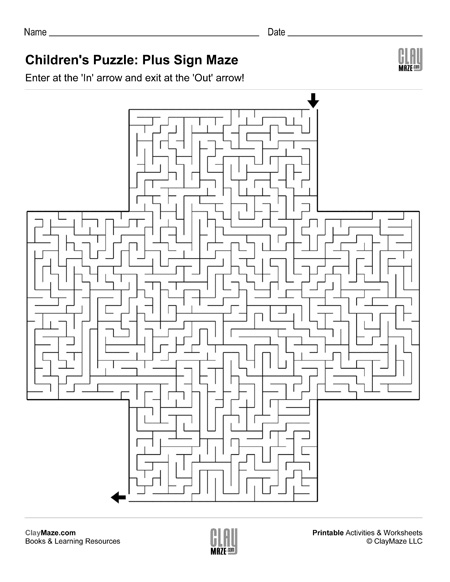
Children’s Puzzle: Plus Sign Maze
Enjoy this plus-sign shaped maze and please note the second page of the PDF is the solution so remember not to peek! We have a variety of printable mazes, puzzles and other fun worksheets on our site. Feel free to
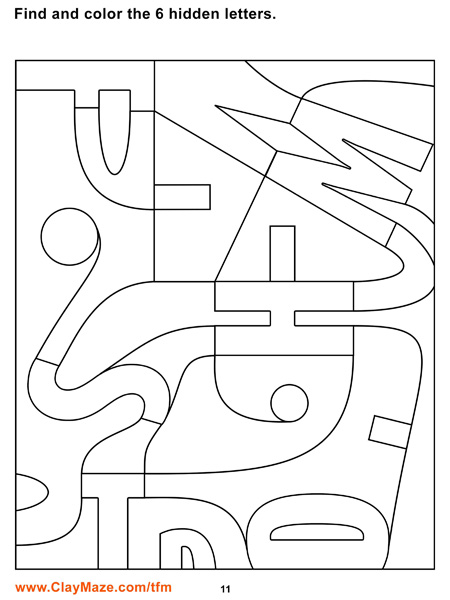
Find the Hidden Letters
Just the understanding that problems can be solved by looking for patterns can help children out dramatically. Understanding that counting by 2’s or 10’s can help them arrive at a solution faster than counting things one at a time can
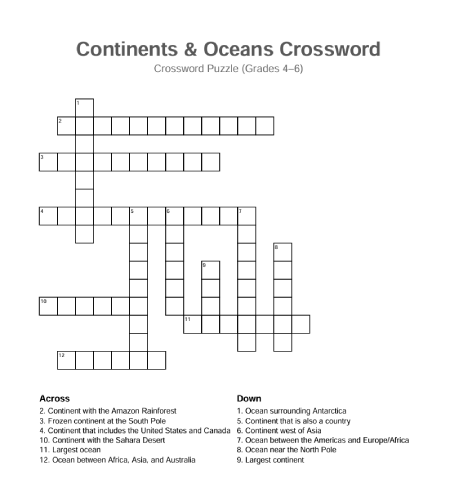
Continents & Oceans Crossword Puzzle (Grades 4–6)
Learning world geography doesn’t have to feel like memorization. This free continents and oceans crossword puzzle gives students in Grades 4–6 an engaging way to review key geography vocabulary while practicing spelling, reading clues, and making connections. This printable crossword
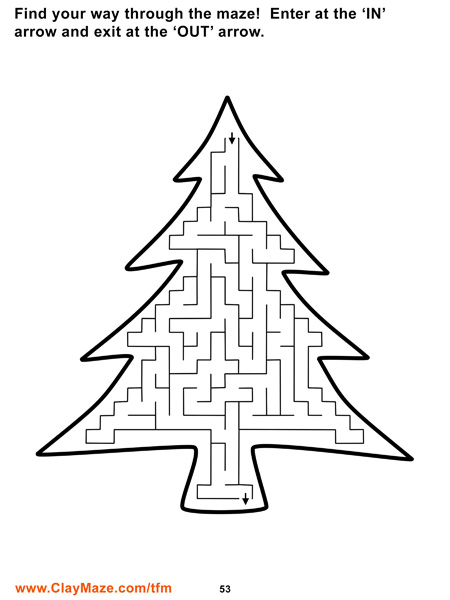
Tree Maze Worksheet
While the majority of the lessons we will be covering here are pencil (or crayon) and paper drawings or sequences, it is a really good idea to try to replicate the lessons using real-world items or other household or environmental