
This worksheet is from the “Mastering the Math Milestone” book. The child is asked to answer questions based on the information in the table using the labels, columns and rows.
Download Printable PDFRelated Worksheets
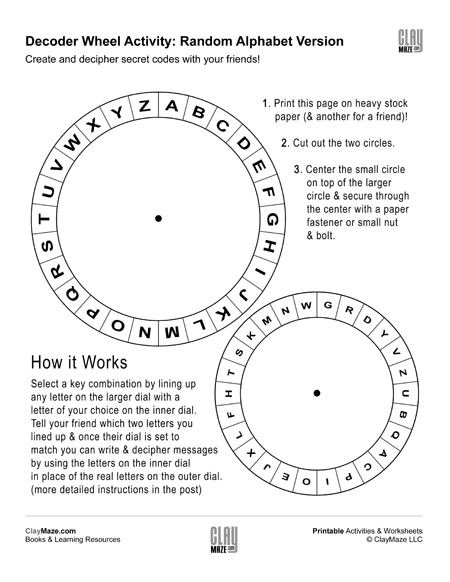
Spy Decoder Wheel – Random Alphabet Version
How the Decoder Works Once you’ve used the instructions on the PDF Download to assemble your decoder you can either share that decoder with a friend or have them make an identical one. To use it, simply line up a
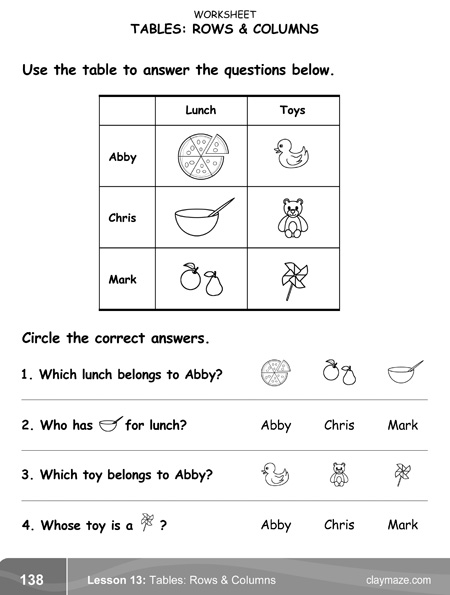
Reading Information in a Table
This worksheet is from the “Mastering the Math Milestone” book. The child is asked to answer questions based on the information in the table using the labels, columns and rows.
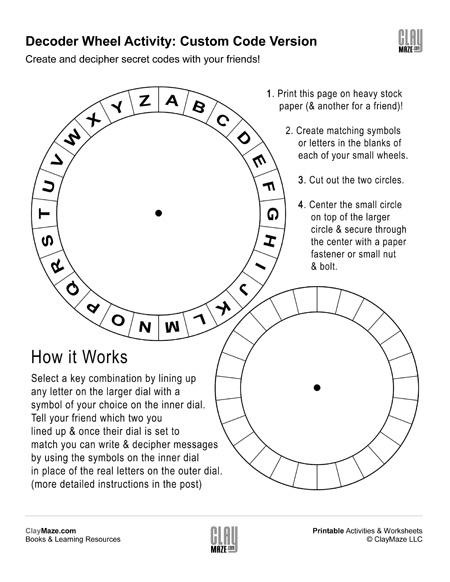
Spy Decoder Wheel – Custom Code Version
This template is the customizable version of our Random Alphabet Decoder Wheel. There are three decoder wheels in all allowing for the coding and decoding of secret messages using random alphabet letters, symbols or your very own code! See the

Telling Time Worksheets – Analog Clock Practice
Practice telling time on analog clocks with these free printable worksheets. Each page features nine clear, easy‑to‑read clock faces, making them ideal for students who are beginning to understand hour, half-hour and 15-minute intervals. These worksheets help children practice and

Time Word Problems Worksheet (Grades 5–6)
Looking for effective practice with elapsed time and real-world schedules? This free printable time word problems worksheet is designed for Grades 5–6 and helps students strengthen their understanding of time, duration, and daily routines. The worksheet includes original, multi-step time

Time Word Problems (Grades 1–2)
This time word problems worksheet for Grades 1–2 helps students practice reading times and understanding elapsed time using simple, real-life situations. The problems ask students to think about start times, end times, and how much time passes during everyday activities