
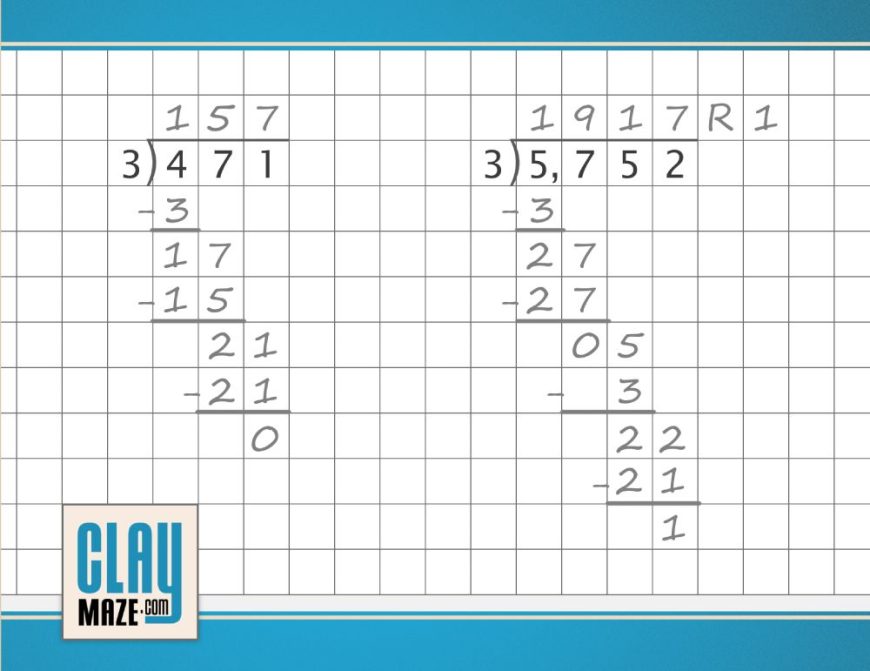
Why Graph Paper Makes Long Division Easier for Kids
I remember long division being very difficult for me growing up. It is one of those milestones in elementary math that can feel like climbing a mountain, for both kids and parents. After addition, subtraction and multiplication, the concept just seemed upside down to me – and once I got the concept down I was plagued by formatting errors. Misaligned digits, skipped steps, and confusion over place value were very frustrating.
Even when a child understands the concept, their written work can tell a different story. Numbers drift across the page, steps get lost, and the final answer doesn’t reflect what they actually know.
But what if the problem isn’t the math itself, but the layout?
Visual structure can make or break a child’s success with long division. When the workspace is chaotic, the brain has to work harder to track each step. When the workspace is organized, the brain can focus on the math. That’s where graph paper quietly shines.
The Grid Advantage
Graph paper isn’t just for plotting points, it’s a quiet hero in the world of math learning, specifically long division. The grid lines provide a natural framework for organizing numbers, aligning place values, and keeping work neat.
- Place value clarity: Each digit gets its own box, which helps students keep hundreds, tens, and ones in their proper columns. This reduces errors caused by misalignment.
- Step-by-step tracking: Long division requires multiple steps – divide, multiply, subtract, bring down. With graph paper, students can visually separate each step, making the process easier to follow.
- Visual order: The grid helps kids see patterns and structure in multi-digit problems. It’s especially helpful when working with remainders or multi-digit divisors.
Even in a standard classroom or homeschool, teachers have found that simply switching to grid paper can dramatically improve accuracy and confidence with long division problems.
Support for Neurodiverse Learners
For students with dysgraphia, ADHD, or visual processing challenges, graph paper can be a game-changer. These learners often struggle with spatial organization, which makes traditional lined paper a barrier rather than a support.
- Reduced anxiety: Grid lines offer built-in boundaries that help students feel more in control of their work. This can reduce the stress and frustration that often accompany math assignments.
- Executive function support: The structure of graph paper helps students stay focused and organized. It minimizes distractions and supports working memory by keeping steps visually anchored.
In special education settings, graph paper is often used as a low-cost, high-impact intervention for students with dyscalculia, dysgraphia, and dyslexia. It’s one of those tools that helps to level the playing field.
A Workbook with Purpose
All of this led us to develop our Long Division Practice Workbook on Graph Paper, with the goal of turning frustration into progress. Whether your child is just beginning long division or needs a fresh approach, this workbook offers structure, clarity, and confidence. I wish I had this when I learned long division.