
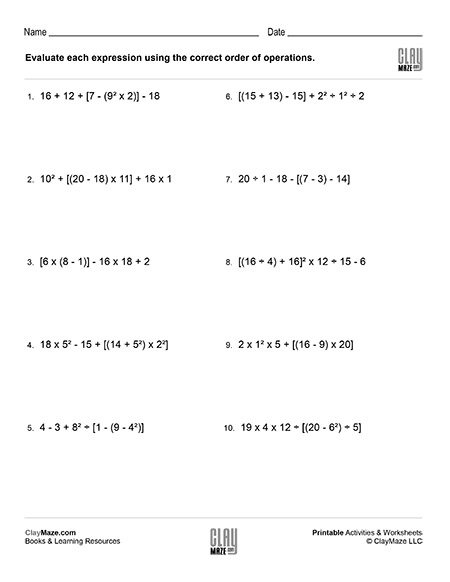
These order of operations worksheets with nested parentheses give students practice working through more complex expressions using PEMDAS. Each printable worksheet includes problems that feature two or more layers of parentheses, helping learners apply the order of operations.
These worksheets are well‑suited for upper‑elementary and middle‑school students, or for anyone ready to move beyond basic parentheses and strengthen their problem‑solving skills. Answer keys are included with every worksheet, making it simple for teachers, parents, tutors, and homeschool educators to check work or walk through each solution.
What is PEMDAS?
PEMDAS is the standard order of operations used in math: parentheses, exponents, multiplication, division, addition, and subtraction.
Worksheet 1 Worksheet 2 Worksheet 3 Worksheet 4Developing a strong understanding of the order of operations is crucial for helping students solve math problems with accuracy and consistency. Using a defined sequence of steps allows students to solve expressions reliably to reach the correct answer.
Order of Operations (PEMDAS) Lesson
When evaluating mathematical expressions, use the order of operations to determine which calculations to perform first. The acronym PEMDAS serves as a simple way to remember the correct sequence and avoid common mistakes.
P – Parentheses: Solve anything inside parentheses or brackets first.
E – Exponents: Evaluate powers or square roots next.
M/D – Multiplication and Division: Work from left to right.
A/S – Addition and Subtraction: Work from left to right.
Example: Evaluate [8 x (9 – 1)] – 16 x 2 + 5
Brackets are often used with nested parentheses but follow the same rules.
Evaluate the expression in the innermost parentheses first.
[8 x (9 – 1)] – 16 x 2 + 5 ➜ [8 x (8)] – 16 x 2 + 5
Evaluate the expression in the remaining parentheses.
(8 x 8) – 16 x 2 + 5 ➜ (64) – 16 x 2 + 5
Multiply (and divide if present) from left to right.
64 – 16 x 2 + 5 ➜ 64 – 32 + 5
Add and subtract from left to right.
64 – 32 + 5 ➜ 32 + 5 ➜ 37
For more practice using PEMDAS, we have additional worksheets using only a single set of parentheses in the expressions.
For more practice or help with other pre-algebra topics, try our workbooks.

Related Worksheets
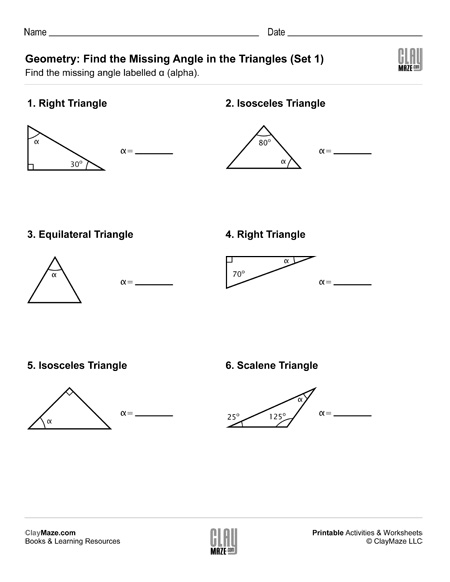
Angles and Triangles Worksheets for Geometry
Understanding how to find a missing angle in a triangle is a key geometry skill for upper‑elementary and middle‑school students. This set includes four free printable worksheets that give students practice with right triangles, isosceles triangles, equilateral triangles, and scalene
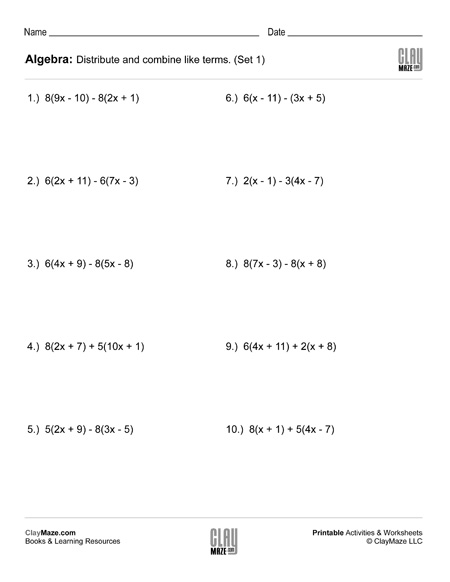
Distributing and Combining Like Terms Worksheets for Pre-Algebra
Download our free worksheets for practice distributing and combining like terms with variables. For more practice or detailed explanation on expressions and equations, try our Pre-Algebra Skill Building Workbook. Topics include: solving 1 step equations and 2 step equations, negative
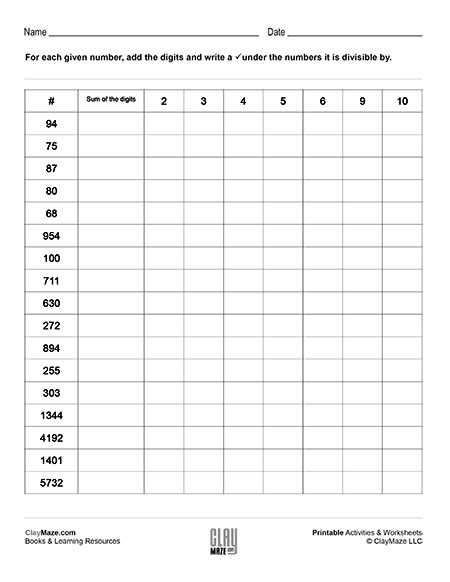
Divisibility Rules Worksheets
Strengthen number sense with these divisibility rules worksheets. Students practice using rules for 2, 3, 4, 5, 6, 9, and 10, with a helpful first column for adding the digits of each number to check divisibility by 3 and 9.
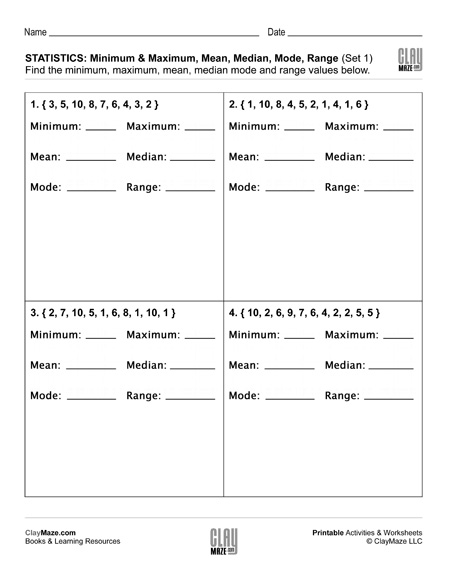
Statistics Worksheets: Minimum, Maximum, Mean, Median, Mode, Range
These free printable statistics worksheets help students practice calculating the minimum, maximum, mean, median, mode, and range for different sets of numbers. Each worksheet includes four data sets and space for students to show their work. These printables are ideal
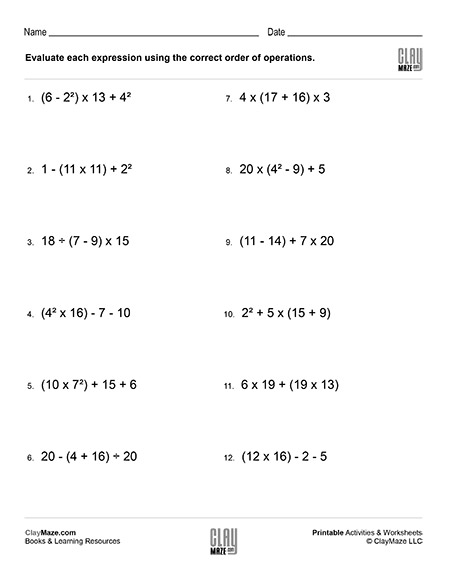
Order of Operations Worksheets (PEMDAS): Single Parentheses
These Order of Operations worksheets are designed to give students practice evaluating math expressions using PEMDAS. Each printable worksheet includes a variety of problems that help reinforce the correct order of operations. They’re designed for use in classrooms or homeschool,
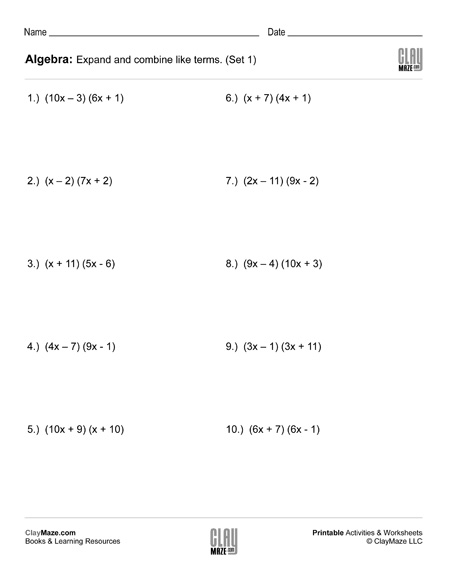
Expanding and Combining Like Terms Worksheets for Pre-Algebra
Download these free printable pre algebra worksheets for practice expanding and combining like terms. For more practice or detailed explanation on expressions and equations, try our Pre-Algebra Skill Building Workbook. Topics include: solving 1 step equations and 2 step equations,