
These worksheets provide practice with the order of operations using straightforward, two‑operation expressions. Each problem includes three numbers and combines addition or subtraction with multiplication or division, giving students a simple introduction to using the correct order of operations. Some answers may be negative, and answer keys are included for quick checking or guided review.
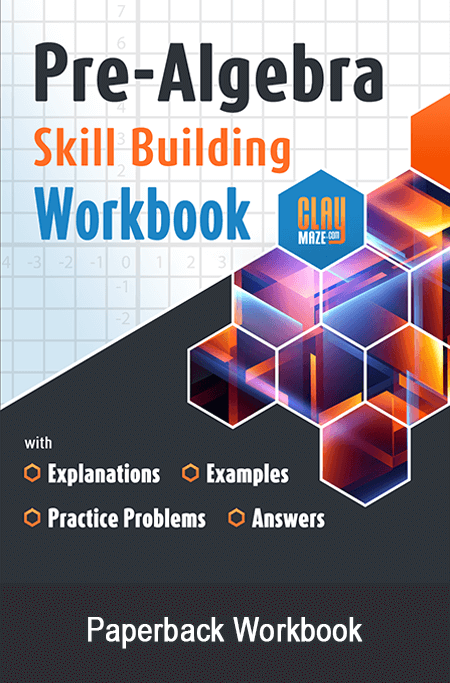
Worksheet 1 Worksheet 2 Worksheet 3 Worksheet 4For more practice or help with other pre-algebra topics, try our workbooks.

Related Worksheets
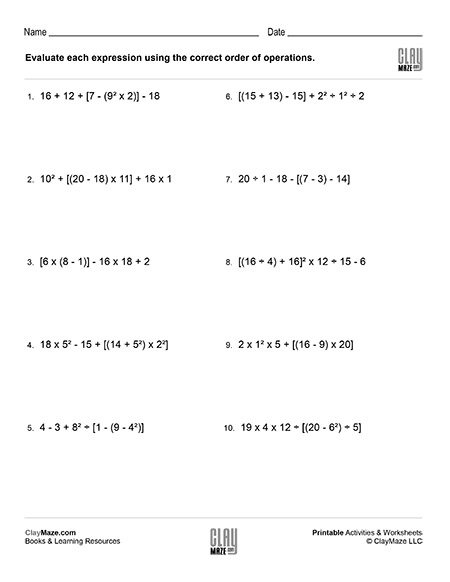
Order of Operations Worksheets (PEMDAS): Nested Parentheses
These order of operations worksheets with nested parentheses give students practice working through more complex expressions using PEMDAS. Each printable worksheet includes problems that feature two or more layers of parentheses, helping learners apply the order of operations. These worksheets
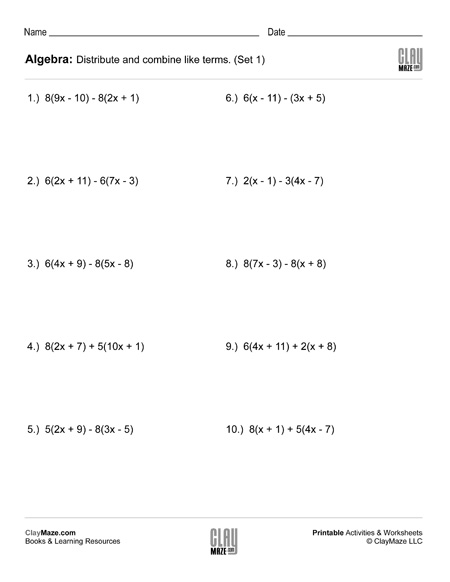
Distributing and Combining Like Terms Worksheets for Pre-Algebra
Download our free worksheets for practice distributing and combining like terms with variables. For more practice or detailed explanation on expressions and equations, try our Pre-Algebra Skill Building Workbook. Topics include: solving 1 step equations and 2 step equations, negative
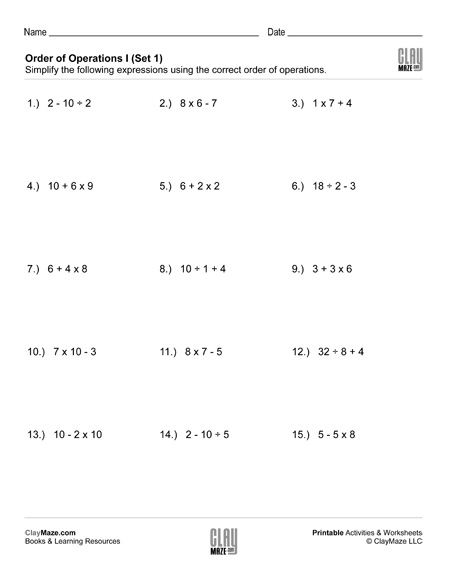
Order of Operations Worksheets: Beginner Level (No Parentheses – 2 Operations)
These worksheets provide practice with the order of operations using straightforward, two‑operation expressions. Each problem includes three numbers and combines addition or subtraction with multiplication or division, giving students a simple introduction to using the correct order of operations. Some
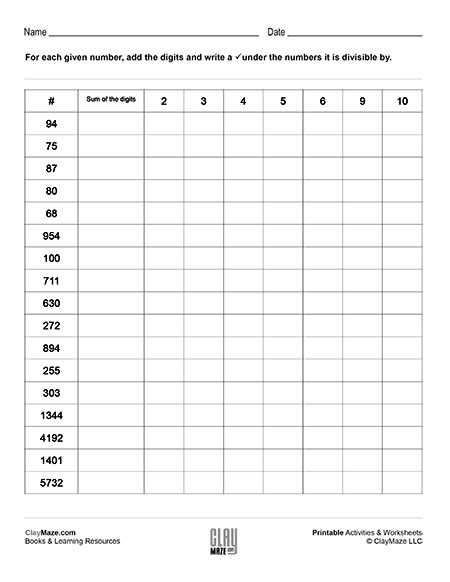
Divisibility Rules Worksheets
Strengthen number sense with these divisibility rules worksheets. Students practice using rules for 2, 3, 4, 5, 6, 9, and 10, with a helpful first column for adding the digits of each number to check divisibility by 3 and 9.
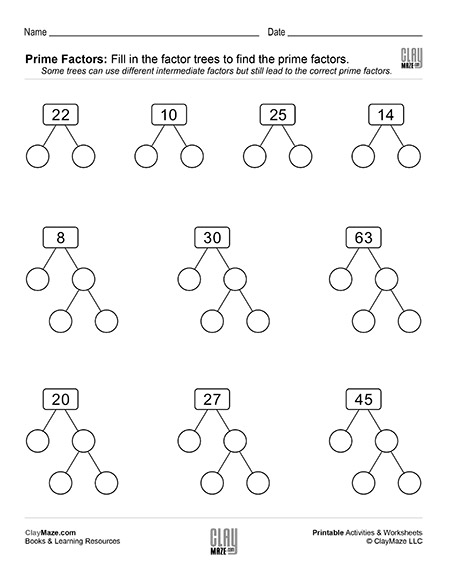
Prime Factorization Worksheets with Factor Trees
Strengthen math skills with this collection of free prime factorization worksheets. Students break down numbers into their prime factors using factor trees, a simple visual method for organizing the steps of prime factoring. These printable worksheets are ideal for reinforcing
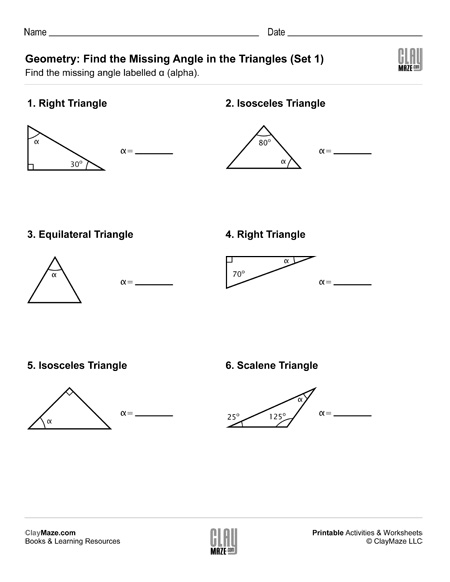
Angles and Triangles Worksheets for Geometry
Understanding how to find a missing angle in a triangle is a key geometry skill for upper‑elementary and middle‑school students. This set includes four free printable worksheets that give students practice with right triangles, isosceles triangles, equilateral triangles, and scalene