
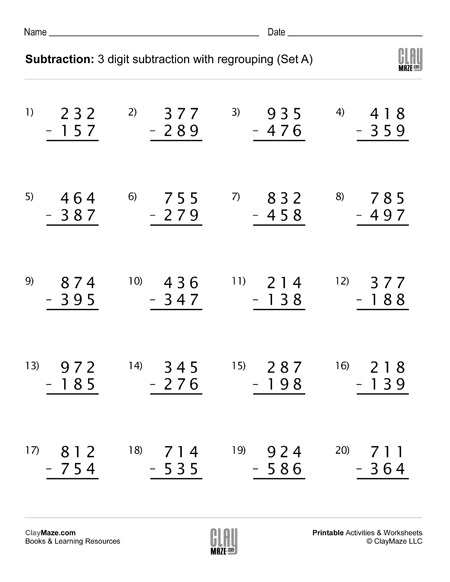
Download these 3 digit subtraction worksheets with regrouping for subtraction practice. Each worksheet has 20 problems and numbers have enough spacing between the digits for borrowing. Answers are included.
Worksheet 1 Worksheet 2 Worksheet 3 Worksheet 4For more subtraction practice, try our Addition and Subtraction Workbook. This big book of practice problems includes addition and subtraction facts, 2 digit and 3 digit addition and subtraction, fill in the blank problems, adding 3 numbers together, and more. This workbook is loaded with addition and subtraction worksheets for daily math practice.
For more addition and subtraction practice, try our workbooks.


Related Worksheets
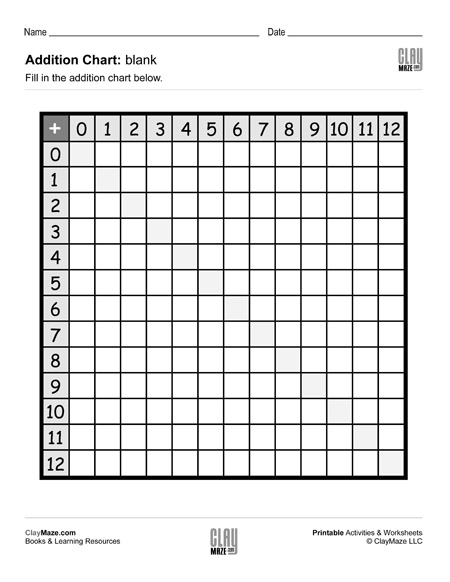
Addition Chart (blank)
This one is a blank addition chart. Not only does this provide practice in addition, but also in using a table and understanding rows and columns.
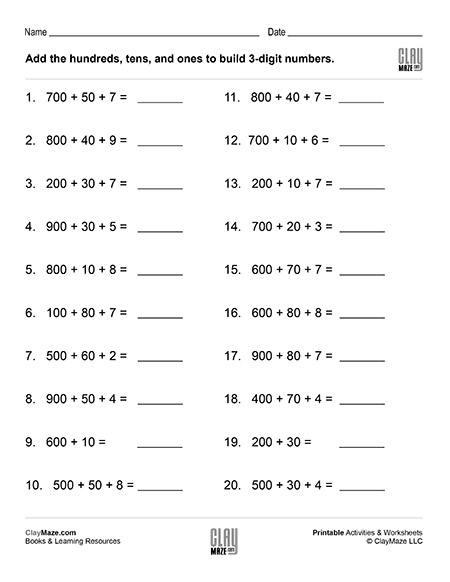
Place Value Worksheets: Adding Hundreds, Tens & Ones
Help students build number sense with these 3‑digit place value worksheets where students add hundreds, tens, and ones to create full numbers. This activity helps children practice expanded form, number building, and place value recognition – key skills for mastering
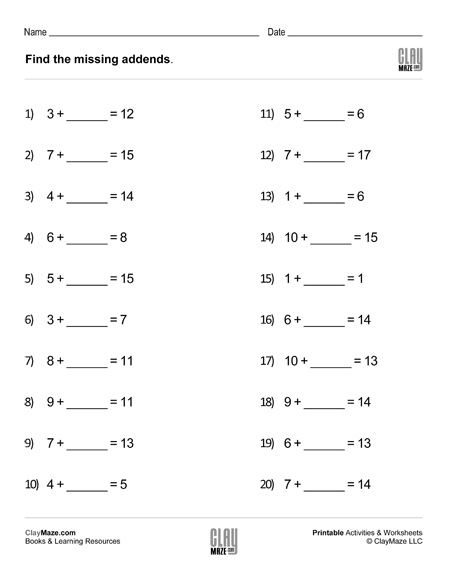
Addition Facts Worksheets – Fill in the Blanks with the Missing Addends
Fill in the blank addition worksheets are a great way to help students remember addition and subtraction facts and the fact families, and to ease the transition from addition to subtraction. Each printable worksheet has 20 problems with answers on

Subtraction Worksheet – Fill in the Blanks Subtraction Facts
Subtraction practice worksheets to help students learn subtraction facts. Fill in the blanks – Find the missing subtrahend. Each worksheet has 20 problems with answers on the second page. For more math practice, try our addition and subtraction workbook. The
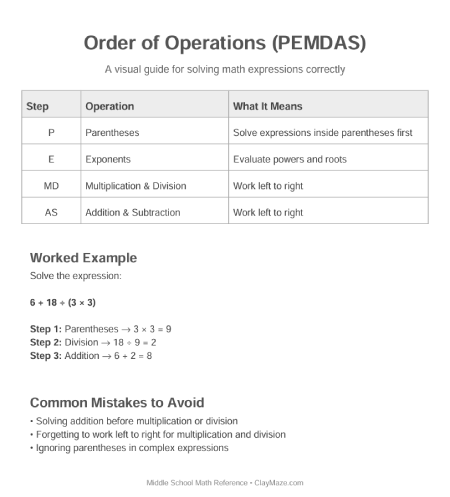
Order of Operations (PEMDAS) – Reference Sheet
This Order of Operations (PEMDAS) printable is a visual reference designed to help students understand the correct sequence for solving math expressions. The guide clearly breaks down each step – Parentheses, Exponents, Multiplication and Division, and Addition and Subtraction –
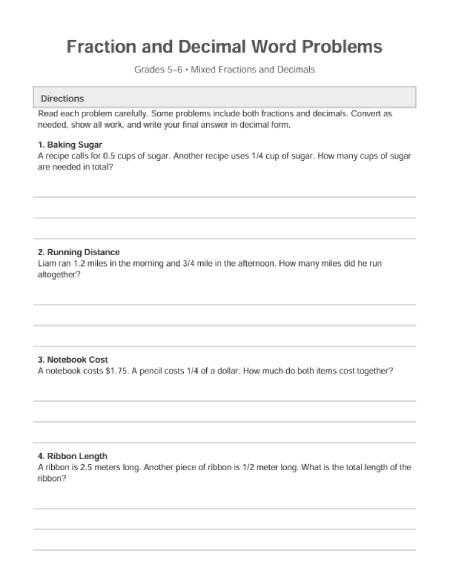
Fraction and Decimal Word Problems Worksheet (Grades 5–6)
This free printable fraction and decimal word problems worksheet is designed for Grades 5–6 and helps students practice solving problems that include both fractions and decimals in real-world contexts. The worksheet features mixed fraction and decimal word problems similar to