
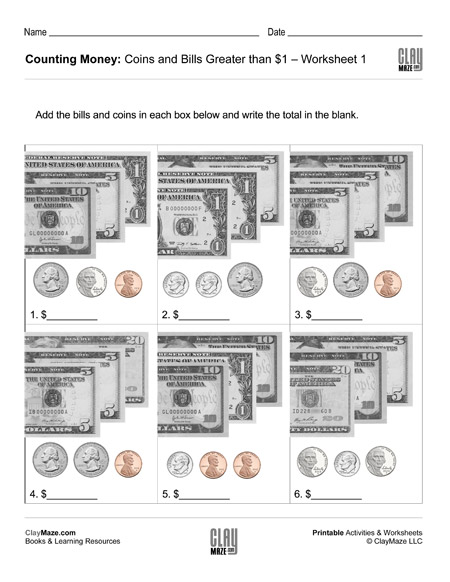
Build money counting skills with this set of two printable worksheets featuring mixed piles of U.S. dollars and coins. Each worksheet includes an assortment of bills and scattered coins for students to total. The second worksheet includes a slightly larger pile, offering a bit more challenge while still keeping the activity accessible. An answer key is included with each worksheet.
Worksheet 1 Worksheet 2More Money Counting Worksheets
coin counting under $1 (ordered and unordered)
counting both coins and dollar bills
How to Count Mixed Money (Bills and Coins)
Start with the Bills
Bills are the easiest to count because each one is worth a whole number of dollars.
- Look at the pile and identify each bill (e.g., $1, $5, $10).
- Group bills of the same kind together.
- Add the bills first to get a dollars total.
Count the Coins Next
Once the bills are totaled, move on to the coins.
- Quarter = 25¢
- Dime = 10¢
- Nickel = 5¢
- Penny = 1¢
A helpful strategy is to:
Start with the highest‑value coins (quarters),
… then add dimes, then nickels, then pennies.
This keeps the counting organized and reduces mistakes.


Related Worksheets
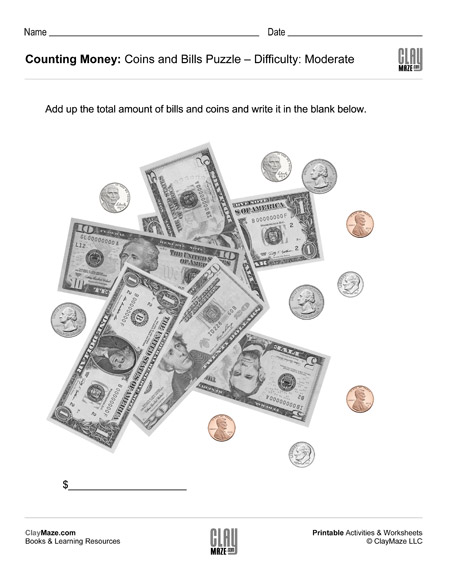
Counting Money with Dollars and Coins: Mixed Pile
Build money counting skills with this set of two printable worksheets featuring mixed piles of U.S. dollars and coins. Each worksheet includes an assortment of bills and scattered coins for students to total. The second worksheet includes a slightly larger
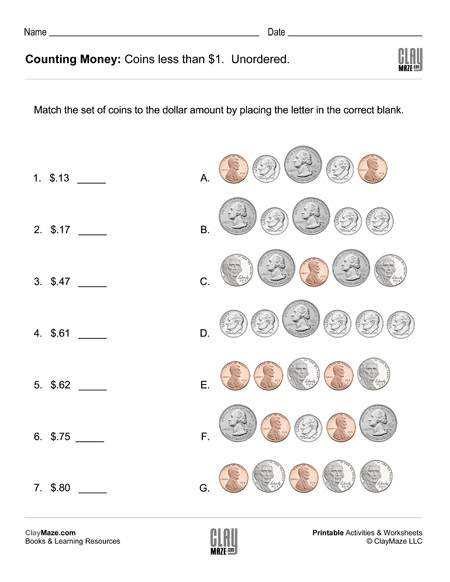
Counting Coins Under $1 with Pennies, Nickels, Dimes and Quarters
Build counting skills with these printable counting coins worksheets with pennies, nickels, dimes, and quarters. Students match money amounts to rows of coins, helping them practice identifying coin values and counting combinations. In the first set of worksheets the coins
Counting Money Worksheets: Coins and Dollar Bills
Build real‑world math skills with these counting money worksheets. Students practice identifying and counting pennies, nickels, dimes, and quarters, as well as adding $1, $5, $10, and $20 bills. These printable activities are great for classroom lessons, homeschool, homework, or