
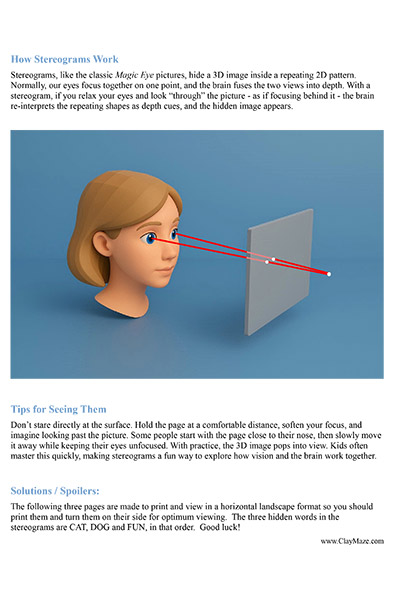
Our stereogram worksheet set introduces children to the fascinating world of hidden 3D images. Each printable page challenges students to relax their eyes and discover a picture concealed within a patterned design – a fun way to explore how vision and the brain work together. Inspired by the classic Magic Eye books, these worksheets combine curiosity with practice, helping kids build patience, focus, and observation skills.
Instructions & Tips
The linked instructions guide parents and teachers through the process of teaching children how to view stereograms. Simple steps show how to hold the page, soften focus, and “look through” the image until the hidden picture appears. With practice, most children quickly learn the trick, and the sense of accomplishment when the image pops into view is both exciting and rewarding. These worksheets are perfect for homeschool lessons, classroom enrichment, or just a playful break that still builds important learning habits.


Related Worksheets
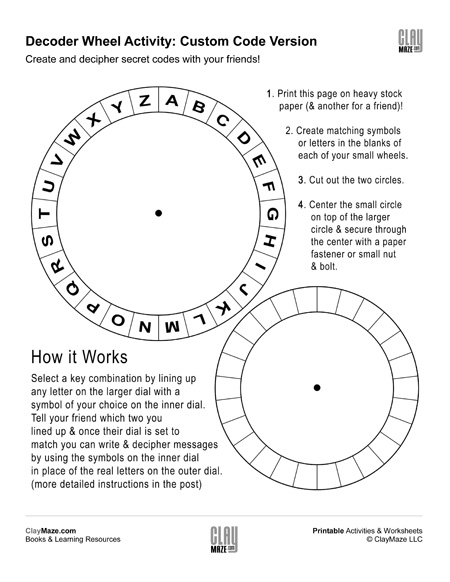
Spy Decoder Wheel – Custom Code Version
This template is the customizable version of our Random Alphabet Decoder Wheel. There are three decoder wheels in all allowing for the coding and decoding of secret messages using random alphabet letters, symbols or your very own code! See the
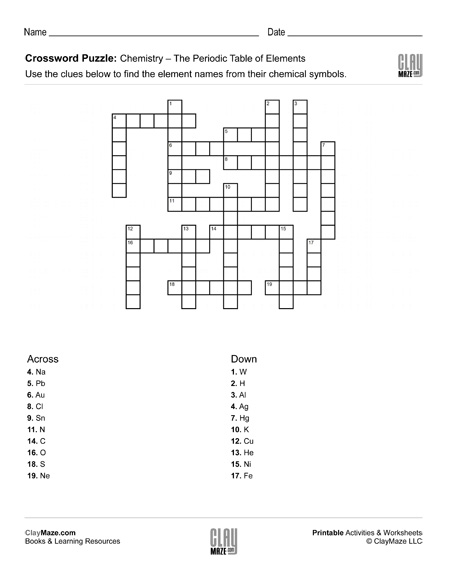
Crossword Puzzle (Chemistry) – The Periodic Table
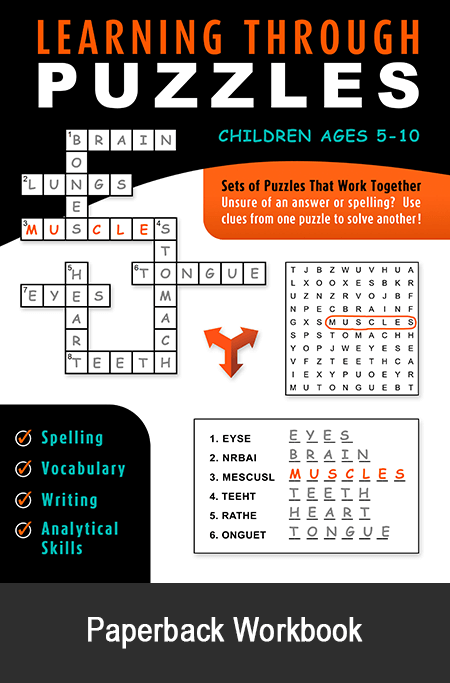
Can you recognize elements by their chemical symbol? Test your skills with this crossword puzzle. View some of our others here or check out our unique children’s puzzle book, Learning through Puzzles
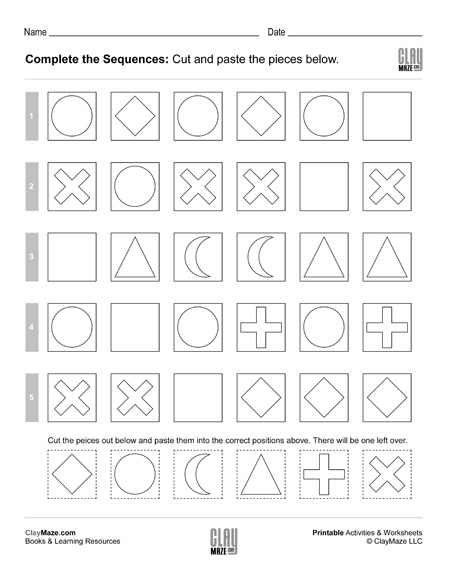
Complete the Sequences Worksheet Activity
Cut out the shapes and paste them into the correct position in the sequences.
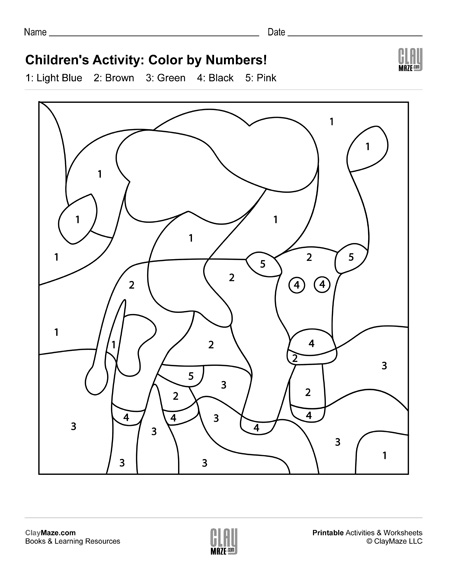
Color by Numbers (cow)
Color by numbers printable PDF. Reveal the picture by coloring the numbered areas with the matching color. Color by numbers pages not only reward the child with better fine motor skills but they are a great introduction to the use
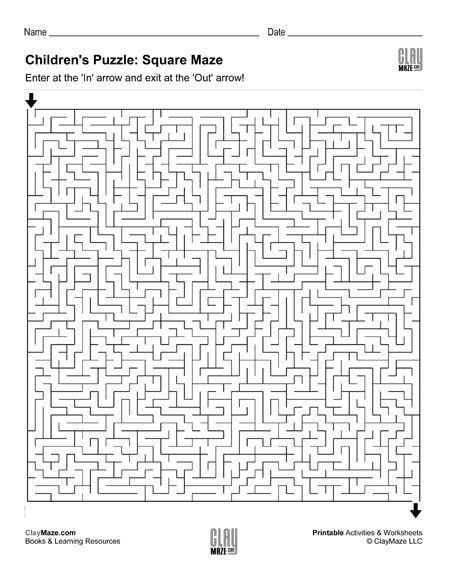
Children’s Puzzle: Square Maze
Feel free to download this and the other free printable mazes and puzzles located on our site and please note, the second page of the PDF is the solution so remember not to peek!
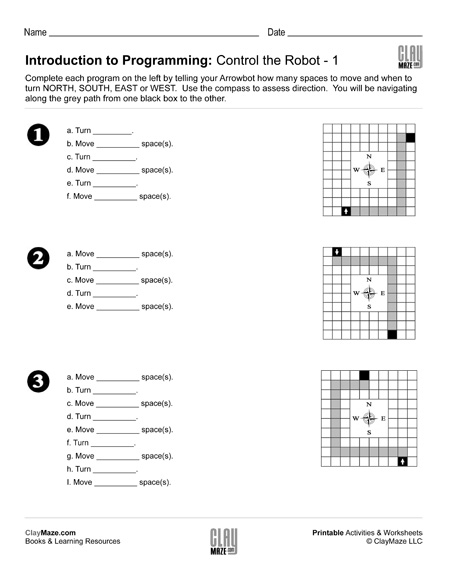
Introduction to Programming: Control the Robot – 1
STEM learning, or learning and preparation for careers in Science, Technology, Engineering and Mathematics has become a pervasive trend in today’s educational circles. With STEM occupations growing at a rate far exceeding non-stem occupations it is only logical that we